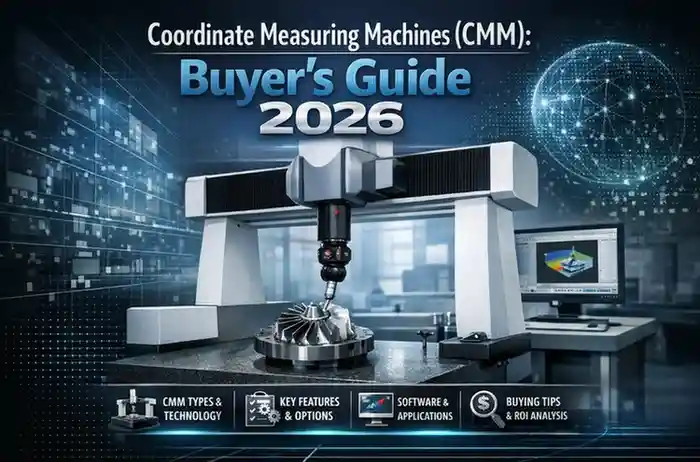
Coordinate Measuring Machines (CMM): Buyer’s Guide 2026
Coordinate Measuring Machines (CMM): Buyer’s Guide 2026
In today’s precision-driven manufacturing environment, accuracy is everything. Whether you are producing aerospace components, automotive parts, or medical devices, even the smallest deviation can result in costly defects and compliance failures. This is where coordinate measuring machines (CMM) come into play.
This comprehensive buyer’s guide explores everything you need to know about industrial metrology equipment, including types, pricing, features, ROI, and how to select the right system for your business.
If you are planning to invest in precision inspection tools, this guide will help you make an informed, high-ROI decision.
What is a Coordinate Measuring Machine (CMM)?
A coordinate measuring machine (CMM) is a device used to measure the physical geometrical characteristics of an object. It uses a probe to detect points on a workpiece surface and generates precise 3D measurements.
These machines are widely used in measurement systems for quality control, inspection, and reverse engineering in manufacturing industries.
Why CMM Machines Are Essential in Modern Manufacturing
With increasing demand for high-precision components, manufacturers rely on advanced inspection systems to ensure consistency and accuracy.
- Maintain tight tolerances
- Reduce production errors
- Ensure compliance with global standards
- Improve product quality
- Enhance customer satisfaction
Types of Coordinate Measuring Machines
1. Bridge CMM
The most common type used in manufacturing. Offers high accuracy and stability for medium to large components.
2. Cantilever CMM
Ideal for small parts and provides easy access for loading and unloading.
3. Gantry CMM
Designed for large and heavy components such as automotive frames and aerospace structures.
4. Horizontal Arm CMM
Used for large and thin components, especially in automotive body inspection.
5. Portable CMM (Articulated Arm)
Flexible and mobile systems ideal for on-site inspections and large assemblies.
Key Features to Consider Before Buying a CMM
1. Measurement Accuracy
Accuracy is the most critical factor. High-end systems offer micron-level precision.
2. Measurement Volume
Choose a machine based on the size of components you need to inspect.
3. Probe Technology
Options include touch-trigger probes, scanning probes, and laser sensors.
4. Automation Capabilities
Automated CMMs improve efficiency and reduce manual intervention.
5. Software Integration
Advanced software enables data analysis, reporting, and CAD integration.
6. Environmental Requirements
Temperature control and vibration isolation can impact accuracy.
CMM Machine Price in 2026
The CMM machine price varies depending on size, accuracy, and automation level.
| Type | Price Range (USD) | Best For |
|---|---|---|
| Portable CMM | $10,000 - $50,000 | On-site inspections |
| Bridge CMM | $50,000 - $200,000 | General manufacturing |
| Gantry CMM | $200,000 - $1,000,000+ | Large components |
| Automated CMM Systems | $150,000 - $500,000+ | High-volume production |
Applications of CMM Machines
Automotive Industry
Used for inspecting engine components, chassis, and body parts.
Aerospace Industry
Ensures precision in critical components such as turbine blades and structural parts.
Medical Devices
Used for inspecting implants and surgical instruments.
Electronics Manufacturing
Ensures accuracy in small and complex components.
Benefits of Using CMM Machines
1. High Precision Measurement
Delivers extremely accurate results for complex geometries.
2. Reduced Defects
Identifies errors early in the production process.
3. Improved Productivity
Automated inspection speeds up production.
4. Data-Driven Decisions
Provides detailed insights for process improvement.
5. Compliance with Standards
Helps meet ISO and industry-specific quality requirements.
Manual vs Automated CMM Comparison
| Parameter | Manual CMM | Automated CMM |
|---|---|---|
| Speed | Low | High |
| Accuracy | Moderate | Very High |
| Labor Requirement | High | Low |
| Cost | Lower | Higher |
ROI of CMM Machines
Investing in advanced industrial metrology equipment offers strong ROI by improving efficiency and reducing waste.
| Metric | Before | After |
|---|---|---|
| Defect Rate | 10% | 2% |
| Inspection Time | High | Reduced |
| Operational Cost | High | Optimized |
Integration with Industry 4.0
Modern CMM machines are integrated with smart manufacturing technologies:
- IoT-enabled sensors
- Cloud-based data storage
- AI-driven analytics
- Automated reporting systems
Future Trends in CMM Technology
- AI-powered inspection systems
- Portable and wireless CMM devices
- Integration with digital twins
- Advanced 3D scanning capabilities
How to Choose the Right CMM Machine
- Define measurement requirements
- Evaluate accuracy and speed
- Consider automation level
- Analyze total cost of ownership
Expert Tips:
- Invest in scalable systems
- Choose reputable suppliers
- Focus on long-term ROI
Conclusion
Coordinate measuring machines are essential tools for achieving precision and quality in modern manufacturing. By investing in the right measurement systems, businesses can significantly improve product quality, reduce defects, and enhance operational efficiency.
Whether you are upgrading your inspection process or building a new facility, selecting the right CMM machine is a strategic investment that delivers long-term benefits.
Ready to enhance your quality control process? Choosing the right CMM system can transform your manufacturing operations and give you a competitive edge in the global market.