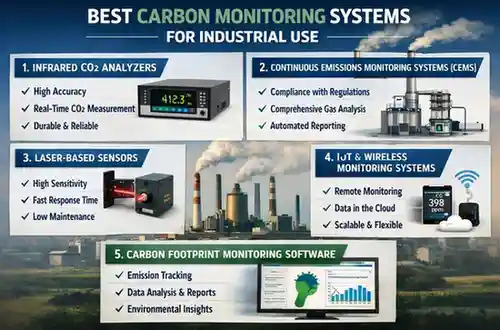
Best Carbon Monitoring Systems for Industrial Use
Best Carbon Monitoring Systems for Industrial Use
As environmental regulations become stricter and sustainability goals intensify, industries across the globe are rapidly adopting carbon monitoring systems to control emissions, improve operational transparency, and achieve ESG compliance.
This comprehensive guide explores the best carbon monitoring systems available in 2026, including advanced technologies, pricing insights, and high-ROI solutions tailored for industrial applications.
What Are Carbon Monitoring Systems?
Carbon monitoring systems are advanced environmental monitoring equipment used to measure, track, and report greenhouse gas emissions such as CO₂, NOx, and SO₂. These systems help industries comply with global environmental standards while optimizing energy efficiency.
Why Industries Need Carbon Monitoring Systems
- Meet strict environmental regulations
- Reduce carbon footprint
- Avoid heavy emission penalties
- Improve ESG reporting and transparency
- Enhance energy efficiency and cost savings
Top Carbon Monitoring Systems in 2026
1. Continuous Emission Monitoring Systems (CEMS)
CEMS provide real-time emission data from industrial stacks and are widely used in power plants, refineries, and manufacturing facilities.
2. Predictive Emission Monitoring Systems (PEMS)
PEMS use AI and machine learning algorithms to estimate emissions based on operational parameters, reducing hardware costs.
3. IoT-Based Carbon Monitoring Systems
These systems use IoT sensors for real-time data collection and cloud-based analytics for reporting and insights.
4. Portable Emission Monitoring Devices
Ideal for small industries and field testing, these systems provide flexibility and cost-effective monitoring solutions.
5. Integrated ESG Monitoring Platforms
Advanced platforms combine carbon tracking, sustainability reporting, and compliance management into one system.
Carbon Monitoring System Cost Breakdown
The cost of emission tracking tools depends on system complexity, automation level, and industry requirements.
| System Type | Price Range (USD) | Best For |
|---|---|---|
| Portable Systems | $5,000 - $20,000 | Small-scale industries |
| PEMS | $20,000 - $120,000 | Mid-sized operations |
| CEMS | $50,000 - $350,000+ | Large industrial plants |
| Integrated ESG Platforms | $100,000 - $500,000+ | Enterprise-level organizations |
Key Features of the Best Carbon Monitoring Systems
Real-Time Data Monitoring
Provides continuous updates on emission levels for quick decision-making.
AI-Based Analytics
Uses machine learning to predict emission trends and optimize operations.
Cloud Integration
Allows remote monitoring and centralized data management.
Automated Compliance Reporting
Generates reports for regulatory authorities automatically.
Scalability
Supports expansion as industrial operations grow.
Comparison of Carbon Monitoring Systems
| Parameter | CEMS | PEMS | IoT Systems |
|---|---|---|---|
| Accuracy | Very High | High | Moderate |
| Cost | High | Medium | Low |
| Maintenance | High | Low | Moderate |
| Automation | High | Very High | High |
Industries Using Carbon Monitoring Systems
Power Generation
Tracks emissions from thermal and renewable power plants.
Oil & Gas
Monitors emissions during drilling, refining, and distribution.
Manufacturing
Ensures compliance with emission standards in production facilities.
Chemical & Pharmaceutical
Controls hazardous emissions and ensures environmental safety.
Benefits of Carbon Monitoring Systems
1. Regulatory Compliance
Helps meet international environmental standards such as ISO and ESG frameworks.
2. Reduced Operational Costs
Optimizes energy consumption and reduces waste.
3. Improved Sustainability
Supports corporate environmental goals and carbon neutrality targets.
4. Enhanced Data Visibility
Provides actionable insights for emission reduction strategies.
5. Competitive Advantage
Boosts brand image and investor confidence.
ROI of Carbon Monitoring Systems
Investing in industrial pollution control systems offers measurable returns.
| Metric | Before | After |
|---|---|---|
| Emission Levels | 100% | 65% |
| Energy Costs | High | Reduced |
| Compliance Rate | Partial | Full |
Integration with Smart Manufacturing
Modern ESG systems integrate seamlessly with smart manufacturing technologies:
- IoT-enabled sensors
- AI-driven analytics
- Cloud-based dashboards
- Digital twin simulations
Challenges in Implementation
- High initial investment
- Complex system integration
- Data accuracy requirements
- Maintenance costs
Future Trends in Carbon Monitoring Systems
- AI-powered predictive emission control
- Blockchain-based ESG reporting
- Real-time global compliance tracking
- Smart grid integration
How to Choose the Best Carbon Monitoring System
- Evaluate emission sources and industry needs
- Compare system accuracy and automation levels
- Analyze total cost of ownership
- Check compliance with global standards
Expert Tips
- Invest in scalable systems
- Prioritize real-time analytics capabilities
- Choose reliable vendors with global support
Conclusion
The adoption of carbon monitoring systems is no longer optional for modern industries—it is essential for sustainability, compliance, and profitability. By implementing advanced emission tracking tools and environmental monitoring equipment, organizations can significantly reduce their environmental impact while improving operational efficiency.
As ESG regulations continue to evolve, investing in the right monitoring system will provide long-term benefits, including reduced costs, improved compliance, and enhanced corporate reputation.
Looking to future-proof your industrial operations? Start by adopting the best carbon monitoring system tailored to your business needs.